
Medical Nutrition Therapy for Kidney Failure and Chronic Kidney Disease: A Practical Guide to Protecting Kidney Function and Managing Nutrient Intake Wisely
The kidneys serve as the body’s primary line of defense and central filtration station, responsible for clearing the blood of toxins and nitrogenous waste, regulating fluid balance, and controlling the levels of salts and minerals such as sodium, potassium, and phosphorus. When kidney function declines or a person develops what is known as kidney disease, these toxins accumulate in the bloodstream, placing a significant burden on overall health.
At this critical stage, nutrition is no longer just an option for improving health — medical nutrition therapy for kidney failure patients becomes a vital treatment plan that stands alongside medication in importance. A diet designed with intelligence and precision can slow the deterioration of kidney function, delay the need for dialysis for many years, and reduce distressing complications such as swelling and high blood pressure.
In this comprehensive guide to medical nutrition therapy for kidney failure patients, we walk through, together with a clinical nutrition specialist, the golden rules for calculating protein and mineral intake, and protecting the kidneys from strain through a scientific and sustainable approach.
Kidney failure is a progressive decline in the estimated glomerular filtration rate (eGFR). Nutritional care for a kidney patient differs from that of others because foods considered “healthy” for a normal person — such as bananas (rich in potassium), nuts (high in phosphorus), or unrestricted amounts of meat — can pose a direct risk to a kidney failure patient, since the kidneys are no longer able to clear the excess.
The strategy behind medical nutrition therapy for kidney failure patients relies on achieving a very precise balance: giving the body enough energy and nutrients to prevent malnutrition and muscle weakness, while at the same time avoiding overloading the kidneys with the waste products of protein digestion and excess minerals.
Regulating and Framing Protein Intake (Protein Regulation)
When protein is digested, the body produces urea and nitrogenous byproducts that the kidneys must excrete. In the early and moderate stages of kidney failure (pre-dialysis), patients are asked to reduce protein intake (roughly 0.6 to 0.8 grams per kg of body weight) to ease the burden on the kidneys. During dialysis, however, protein needs increase to compensate for what is lost during sessions.
Precise Potassium Balance (Potassium Control)
Potassium is an essential mineral for muscle and heart function, but a sharp rise in blood potassium due to declining kidney function can cause serious heart rhythm disturbances. Nutrition therapy involves guiding patients toward low-potassium food choices and special cooking methods, such as soaking and boiling vegetables in water and then discarding the water.
Controlling Phosphorus and Calcium (Phosphorus & Calcium Balance)
Elevated blood phosphorus draws calcium out of the bones, leaving them prone to fracture and osteoporosis (Renal Osteodystrophy). Nutrition therapy identifies hidden sources of phosphorus — particularly processed foods and soft drinks — and approaches natural sources with great caution.
Managing Fluids and Sodium (Fluids & Sodium Management)
Sodium is the primary driver of fluid retention and high blood pressure. Reducing sodium intake helps limit swelling in the feet and lungs, and the total daily fluid allowance is determined based on daily urine output and the patient’s overall health condition.
| Mineral | Sources to Be Cautious of or Reduce | Safe, Kidney-Friendly Alternatives |
|---|---|---|
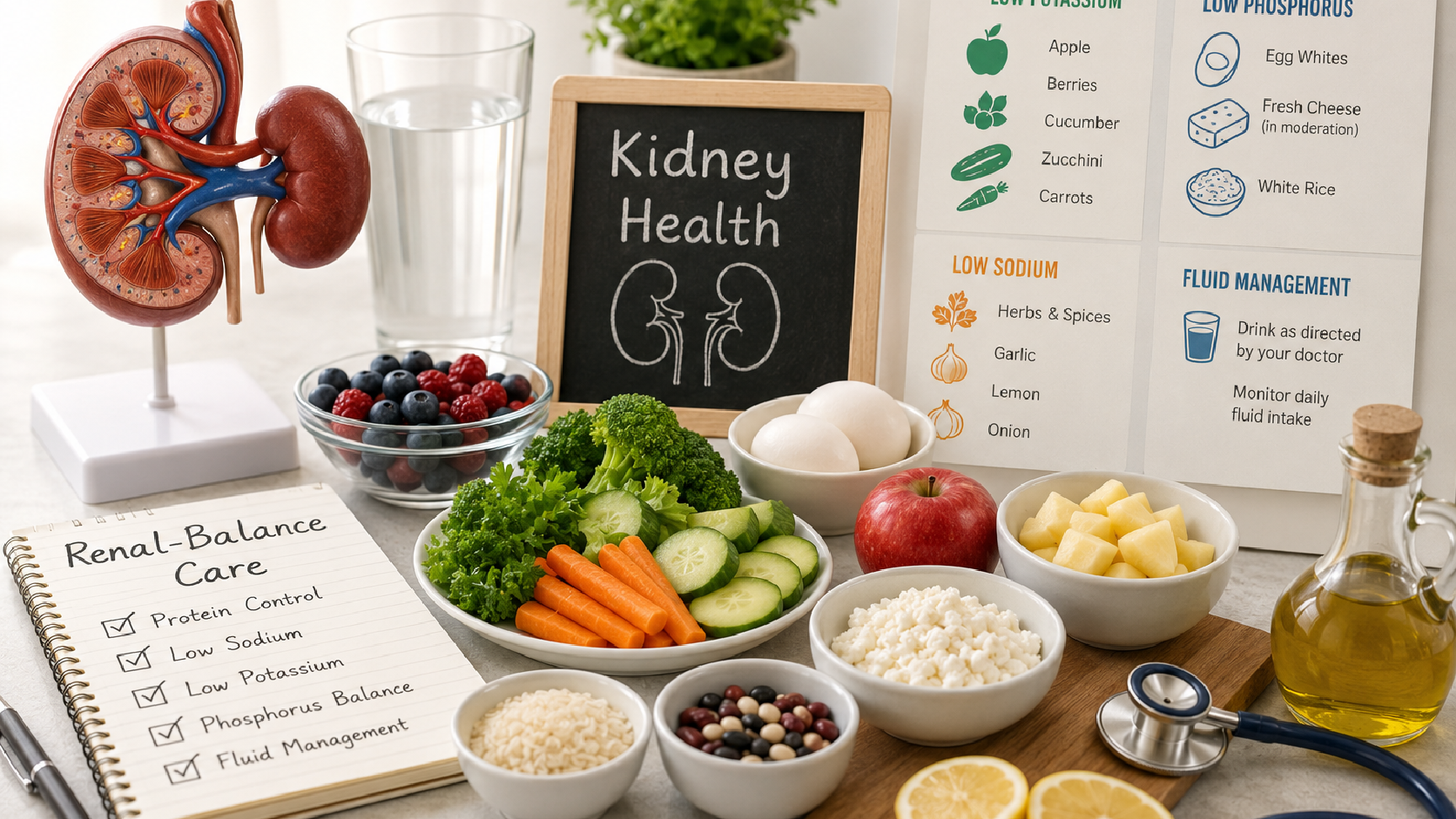
| Potassium (High Potassium) | Bananas, oranges, tomatoes, potatoes, dates, kiwi | Apples, berries, cucumber, zucchini, boiled carrots |
| Phosphorus (High Phosphorus) | Processed cheeses, nuts, legumes, dark carbonated drinks | Fresh cottage cheese (in measured amounts), egg whites |
| Sodium (High Sodium) | Canned foods, pickles, fast food, bouillon cubes | Natural herbs (garlic, onion, lemon, cumin for flavor) |
- Rely on egg whites as a high-quality protein source: Egg whites provide excellent pure protein with a much lower phosphorus content compared to the yolk and other sources.
- Use the “double-boiling” method for vegetables: Cutting vegetables and soaking them in warm water for several hours, then boiling them and discarding the cooking water, significantly reduces their potassium content.
- Read nutrition labels: Avoid foods containing phosphate additives, which the intestines absorb at a rate of 100%.
Q: Does a kidney failure diagnosis mean completely avoiding meat and protein?
A: Absolutely not! Within a medical nutrition therapy plan for kidney failure patients, completely eliminating protein causes malnutrition and severe muscle weakness. The solution is to calculate the exact grams needed with a clinical nutrition specialist and provide only the body’s true net requirement.
Q: Are common salt substitutes safe for kidney patients?
A: No. Most “diet salts” or commercial substitutes replace sodium with “potassium chloride,” which can be extremely dangerous for a kidney patient. Patients should rely only on herbs and lemon for flavor.
Protect Your Kidney Function With a Precisely Calculated Nutrition Plan
Get in touch with a clinical nutrition specialist to design a medical nutrition therapy plan for kidney failure, calculated down to the gram based on your latest medical tests and kidney function results.
Treatment program: Renal-Balance Care Program with Dr. Doaa Ahmed Sabry, Clinical Nutrition Specialist.
Would you like a plan within the medical nutrition therapy program for kidney failure patients to protect your kidney function and slow the progression of kidney disease? Book your assessment session within the Renal-Balance Care Program with Dr. Doaa Ahmed Sabry.